Leveraging 5G Technology for Enhanced Programmatic Advertising Experiences
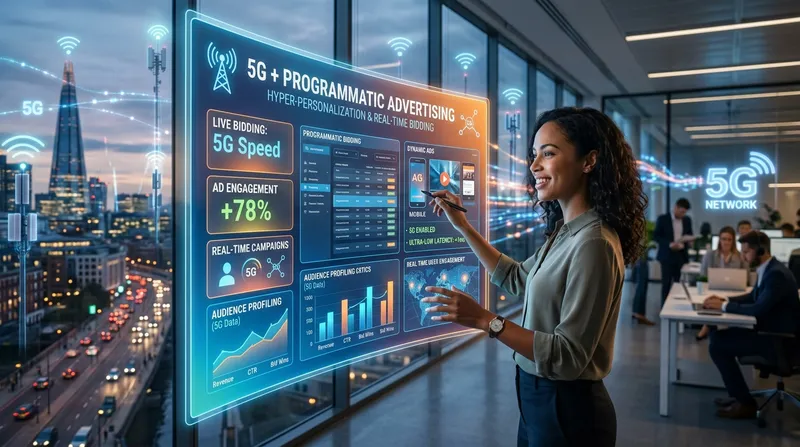
In the ever-evolving landscape of digital marketing, the advent of 5G technology promises to usher in a new era for programmatic advertising. Known for its higher data speeds and reduced latency, 5G is expected to enhance how advertisers reach and engage consumers in more dynamic and personalized ways.
The Advantages of 5G in Programmatic Advertising
The rollout of 5G technology is poised to significantly benefit the programmatic advertising sphere, primarily through its ability to handle larger data volumes at unprecedented speeds. These enhancements will not only optimize ad delivery but also improve the precision and effectiveness of campaigns.
Real-Time Data Processing
5G's improved bandwidth allows for the real-time processing of data, enabling advertisers to tailor their marketing messages instantly based on current consumer behavior. This means programmatic platforms can adapt campaigns on the fly, using AI and machine learning to generate insights faster and more accurately than ever before.
Enhanced User Experience
With faster internet speeds, consumers will enjoy a smoother digital experience, which translates into more uninterrupted and seamless ad interactions. This improvement is particularly beneficial for rich media ads that demand high data transfer rates, such as video and interactive content.
Reshaping Consumer Engagement
The capabilities of 5G extend beyond speed and connectivity, fundamentally reshaping how brands interact with consumers.
Personalization and Interactivity
By enabling more personalized and interactive ad formats, 5G allows advertisers to engage users with augmented reality (AR) and virtual reality (VR) experiences without noticeable lag. For instance, brands can create immersive, in-app shopping experiences that bridge the physical and digital worlds, providing consumers with interactive product demonstrations or virtual try-ons in real time.
Improved Geolocation Targeting
As 5G networks mature, programmatic ads can leverage geolocation data with higher accuracy. This enables hyper-local targeting strategies, where ads are delivered based on a user's precise location, boosting relevancy and increasing conversion rates. Brands can deploy location-based offers, enhancing the relevance and immediacy of their advertising.
Challenges and Considerations
While the potential benefits of 5G for programmatic advertising are immense, there are challenges to consider.
Infrastructure and Cost
The widespread adoption of 5G infrastructure varies by region and may require significant investment in network upgrades by both telecommunications companies and advertisers looking to fully leverage its capabilities.
Privacy Concerns
As data collection becomes more granular with enhanced connectivity, maintaining privacy compliance is critical. Advertisers must ensure that they adhere to evolving data protection laws, balancing personalization with consumer privacy.
Conclusion
The impact of 5G on programmatic advertising will be profound, offering marketers unprecedented tools to deliver more personalized, engaging, and efficient campaigns. As the technology matures, advertisers who embrace 5G-enabled innovations will likely outperform competitors, redefining industry standards and consumer experiences. As always, keeping abreast of developments and staying agile in strategy execution will be key to harnessing the full potential of this transformative technology.