Navigating the Intersection of Digital Out-Of-Home Advertising and Programmatic Strategies
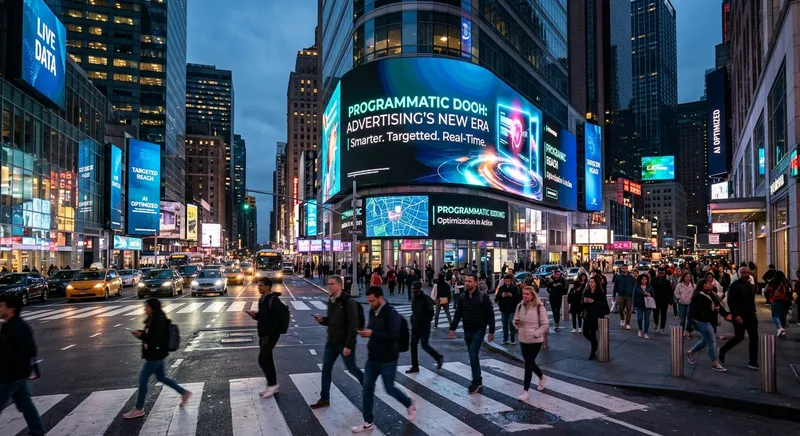
The Rise of Digital Out-Of-Home Advertising
As technology advances and consumer behaviors evolve, the advertising industry faces continuous transformation. Among the vibrant corners of this revolution is Digital Out-Of-Home (DOOH) advertising, which has grown significantly with the integration of digital screens in public spaces. Unlike traditional out-of-home (OOH) advertising, DOOH leverages digital and often connected displays, making it a dynamic part of the media buying ecosystem.
According to a 2022 report by [MarketsandMarkets](https://www.marketsandmarkets.com/Market-Reports/digital-out-of-home-advertising-market-193104239.html), the global DOOH market is expected to grow to $26.2 billion by 2026, highlighting a compound annual growth rate (CAGR) of 11.2%. This trend points to a rapid shift where advertisers see value in delivering dynamic, real-time content to targeted audiences in physical environments.
Integrating Programmatic Strategies into DOOH
While DOOH provides a platform for engaging digital content, its true potential unfolds when integrated with programmatic strategies. Programmatic DOOH enables the automated buying and selling of ad inventory, optimizing ad delivery based on various data signals such as audience location, time of day, and environmental conditions.
Real-Time Bidding and Data-Driven Deployment
Real-time bidding (RTB) has been a cornerstone of programmatic advertising in the online space, but its application in DOOH presents unique challenges and opportunities. By using RTB, advertisers can dynamically bid for placements in premium locations at the right moment, ensuring maximum exposure.
Moreover, the use of data analytics in programmatic DOOH allows for more precise targeting. By harnessing data from mobile devices, social media trends, and IoT sensors, campaigns can be tailored to the audience's specific needs and interests, improving engagement and ROI.
Contextual and Creative Flexibility
One significant advantage of programmatic DOOH lies in its ability to offer contextual and creative flexibility. Unlike static billboards, digital screens can adjust their content based on the immediate environment and audience composition. For example, an ad for a refreshing drink can be displayed when outdoor temperatures are high, driving relevance and spontaneity.
Challenges and Considerations
While the potential of programmatic DOOH is vast, several challenges need addressing.
Scalability and Fragmentation
The digital signage landscape is highly fragmented, with varying formats and specifications across markets. Standardizing these formats to allow seamless integration with programmatic platforms remains a hurdle. Moreover, the scalability of programmatic DOOH requires continuous investment in centralized platforms that can manage diverse inventory sources and ensure efficient ad delivery.
Privacy Concerns
As with any data-driven advertising initiative, privacy is a paramount consideration. The integration of programmatic strategies into DOOH necessitates careful handling of consumer data, especially in light of GDPR and other stringent privacy regulations worldwide. Ensuring anonymization of data and opting for privacy-friendly identifiers are critical tasks for advertisers to balance personalization with compliance.
Future Trends and Innovations
Looking forward, the future of DOOH, enhanced by programmatic strategies, holds several exciting developments.
Enhanced Interaction through AI and IoT
The inclusion of Artificial Intelligence (AI) and Internet of Things (IoT) technologies can lead to more interactive and responsive DOOH campaigns. Screens might adapt content in real time not just based on static data but through active engagement with consumers. For instance, integrating facial recognition can deliver tailored content that might vary between an early morning commuter and a late-night diner.
Augmented Reality and DOOH
Augmented reality (AR) brings a new dimension to DOOH by adding layers of interactive content, enhancing consumer experience. Programmatic AR campaigns could let individuals engage with ads in novel ways, fostering deeper interaction and memorable brand experiences.
Conclusion
As DOOH continues to gain sophistication through programmatic techniques, advertisers are presented with an expansive opportunity to engage audiences in real-world spaces effectively. While challenges remain, particularly around data usage and infrastructure standardization, the benefits of merging programmatic precision with the tangible reach of DOOH are undeniable. By staying ahead of technological developments and consumer behavior trends, brands can establish a strong presence in this evolving advertising frontier.