The Transformative Power of Quantum Computing in Programmatic Advertising
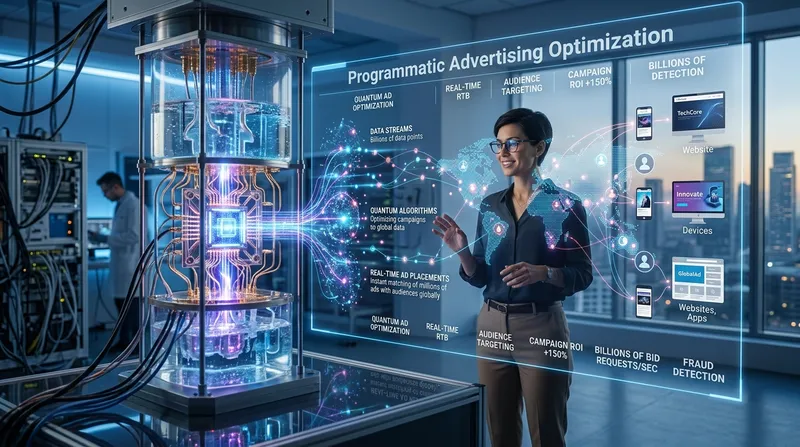
In the fast-paced realm of programmatic advertising, staying ahead of the curve requires more than just adapting to existing technologies; it means anticipating revolutionary changes. One of the most promising advancements on the horizon is quantum computing, which has the potential to transform how programmatic advertising is conducted by offering unparalleled processing power and efficiency.
Understanding Quantum Computing in Ad Tech
Decoding Quantum Basics
Quantum computing is fundamentally different from classical computing. While classical computers use bits to process information in binary — either 0 or 1 — quantum computers use quantum bits, or qubits, which can represent and process multiple states simultaneously due to a property called superposition. This allows quantum computers to perform complex calculations at exponential speeds compared to their classical counterparts.
The Quantum Leap in Data Processing
In programmatic advertising, decisions need to be made in milliseconds based on vast amounts of data. Quantum computing can process this data far more efficiently than traditional systems, enabling faster analysis and decision-making. This enhancement can significantly improve the speed at which ad exchanges operate, optimizing the delivery of targeted advertisements to users.
Achieving Precision Targeting
Enhancing Algorithms with Quantum Mechanics
Programmatic advertising relies heavily on algorithms for targeting and engagement strategies. Quantum computing can enhance these algorithms by providing deeper insights from larger datasets, leading to more accurate user behavior predictions and preferences. This means advertisers can create more refined and personalized campaigns, potentially increasing ROI and engagement rates.
Overcoming Current Limitations
Today's programmatic advertising systems are often constrained by issues like latency and scalability, especially when handling real-time bidding and dynamic ad placements. Quantum computing offers the capability to address these challenges by processing requests and optimizations in a fraction of the time, thus facilitating seamless and scalable operations on a global scale.
Exploring Practical Applications
Real-Time Bidding (RTB) Optimization
One of the primary applications of quantum computing in ad tech could be enhancing the efficiency of real-time bidding. Quantum algorithms can evaluate numerous bidding strategies simultaneously, potentially discovering optimal bid prices and placements faster than current methods, thus maximizing impression values and ad spend efficiency.
Advanced Fraud Detection
Ad fraud remains a significant concern for marketers worldwide. Quantum computing could bolster anti-fraud measures by identifying patterns and anomalies quickly, reducing the impact of fraudulent activities. This would protect advertisers' budgets and contribute to cleaner data for more reliable analytics.
Current Hurdles and Future Prospects
Technical and Practical Challenges
Despite its promise, quantum computing is still in its nascent stages, with many technical hurdles to overcome, such as error rates and quantum decoherence. These factors currently restrict the widespread commercial deployment of quantum machines. Moreover, adapting current ad tech infrastructure to accommodate quantum solutions will require significant investment and innovation.
Anticipating Future Integration
As quantum computing technology matures, it will likely become an integral part of the ad tech ecosystem. Companies in the sector should begin strategizing on how to incorporate quantum advancements into their existing frameworks. Early adopters of quantum solutions stand to benefit significantly in terms of competitive advantage and operational efficiency.
Conclusion
Quantum computing holds the potential to redefine programmatic advertising by enabling advertisers to analyze and leverage data faster and more accurately than ever before. While still a theoretical concept in many ways, the progress being made in quantum technology is encouraging, and its eventual integration into digital marketing strategies could usher in a new era of precision, speed, and effectiveness.